

Abu Dhabi: SiltaNews – News Desk
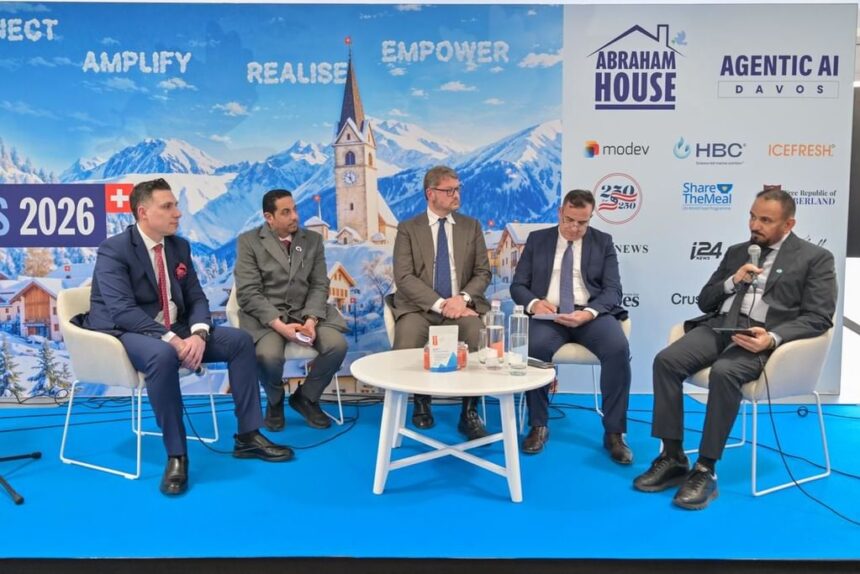
The Inter-Parliamentary Coalition for Global Ethics and the International Committee on Countering Extremist and Hate Speech organised the session. TRENDS Research & Advisory participated in an international panel discussion organised by the Inter-Parliamentary Coalition for Global Ethics and the International Committee on Countering Extremist and Hate Speech (ICCEHS), on the sidelines of the World Economic Forum in Davos. The session, From Agreements to Outcomes: The Abraham Accords and the Path to Peace and Prosperity, brought together an elite group of decision-makers, thought leaders, and representatives of international institutions.
In a keynote speech, Dr. Mohammed Abdullah Al-Ali, CEO of TRENDS Research & Advisory, highlighted the transformative dimensions of the Abraham Accords, emphasising that they go beyond mere political arrangements. He noted that the Accords constitute a new ethical and cultural framework for redefining the concept of peace in the Middle East and beyond. During the panel discussion hosted by Abraham House in Davos, which brought together high-level officials, policymakers, academics, media professionals, and civil society leaders from more than 20 countries, Dr. Al-Ali stressed that the Abraham Accords shift the trajectory of peace from the logic of conflict management to the logic of building coexistence, and from a focus on formal relations between states to investing in human relations between peoples.
He explained that historical experiences confirm that sustainable peace is not imposed by political decisions alone, but is built from a grassroots societal level through cultural, educational, and economic interaction. He further noted that the Abrahamic dimension constitutes a comprehensive moral pillar grounded in mutual respect, the preservation of human dignity, and the recognition of diversity as a source of strength. Dr. Al Ali emphasised that the real challenge lies in translating political normalisation into tangible societal impact through integrated policies that invest in education, media, and culture.
Such policies, he noted, enable young people to play a pivotal role in cross-border projects, exchange programs, and innovative initiatives that foster a long-term culture of peace. The panel discussion addressed the Abraham Accords not merely as diplomatic agreements, but as a transformational framework capable of promoting tolerance, intercultural dialogue, and the consolidation of long-term peace in the Middle East and beyond. Moving beyond the phase of political signing, the discussions focused on how pathways of normalisation can be translated into tangible social impact and a sustainable culture of coexistence.
In his remarks during the session, Dr. Nidal Shuqair, Executive Director of the International Committee for Combating Extremism and Hate Speech (ICCEHS), stressed that the Abraham Accords represent a historic turning point in the region, stating, “Peace is not a moment, but a journey. Prosperity is not a promise, but a responsibility.” He emphasised that the Abraham Accords have opened a significant door, noting that through investment in people, cooperation, and change, these agreements can become more than a diplomatic milestone and evolve into a model to be emulated. During his speech, Dr. Shuqair officially announced the launch of the ICCEHS Abrahamic Coexistence Programme, describing it as “an initiative grounded in innovation, responsibility, and human dignity, aimed at creating a genuine people-to-people movement that says yes to peace and transforms agreements into a tangible reality on the ground.”