

Johannesburg: SiltaNews – News Desk
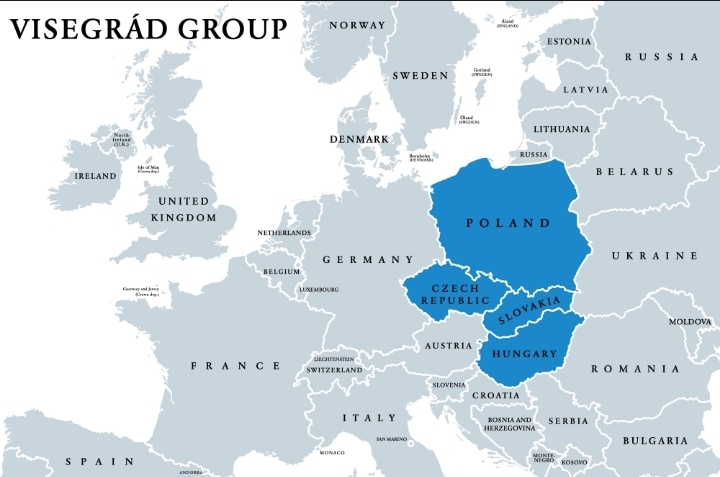
While the world often looks to the West for innovation, a quiet but massive shift is occurring in the heart of Europe. The Visegrád Group, traditionally known for its shared history and political maneuvers, has rebranded itself in 2026 as a critical “Tech-Industrial Axis.”
1. The “Battery Valley” of Europe
One of the most striking facts this year is that the V4 countries, alongside Romania and the Baltics, now account for nearly 20% of the European Union’s total GDP on a purchasing-power basis. They are no longer just “emerging markets” – they are the factory floor of the future.
The region has become the global hub for EV battery production and semiconductor packaging. Massive investments that once favored Germany or France have shifted to Poland and Hungary, driven by a skilled workforce and lower operational costs.
2. Digitalization and the “Competitive Visegrád”
Under the current Hungarian Presidency (2025-2026), the motto is “Competitive Visegrád.” A primary focus has been the Digital Transition of Public Administration.
The V4 are currently piloting a cross-border AI framework to simplify judicial cooperation and public services. This “Digital Visegrád” initiative is designed to make the region the most business-friendly tech environment in the EU by the end of 2027.
3. A Strategic Defense Titan
In 2026, the V4’s geopolitical weight is impossible to ignore.
Poland is spending over 4% of its GDP on defense, the highest ratio in NATO after the United States. Collectively, the Visegrád region now accounts for over 20% of Europe’s total defense procurement, turning the “Eastern Flank” into a technological fortress.
4. The “V4+ Format” Expansion
While internal politics can be complex, the V4 is increasingly looking outward. The V4+ format is expanding its reach to the Western Balkans and even Northern Africa.
For leaders in regions like Egypt, the V4 represents a blueprint for how a group of mid-sized nations can maintain sovereignty while becoming indispensable to a larger economic bloc like the EU.