

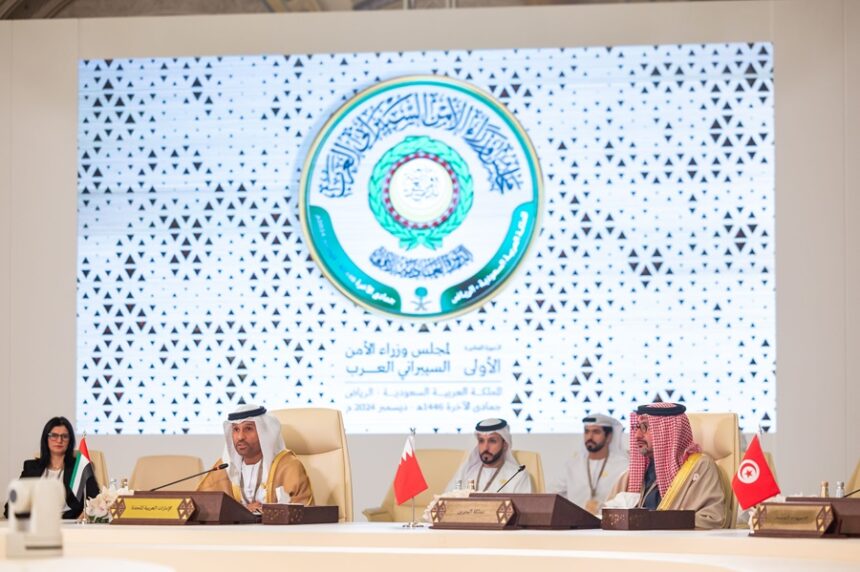
Abu Dhabi: SiltaNews – News Desk
The Arab Cybersecurity Ministers Council held its second Executive Office meeting today (Tuesday) via video conference, with the participation of Their Excellencies and Highnesses the representatives of the member states of the office, His Excellency Dr. Mohammed Hamad Al Kuwaiti, Chairman of the UAE Cybersecurity Council, and His Excellency Dr. Ibrahim bin Saleh Al Furaih, Secretary-General of the Council.
The meeting discussed several topics on its agenda and issued several decisions in preparation for the second regular session of the Arab Cybersecurity Ministers Council, which will be held in the capital, Riyadh, at the end of this September. These decisions included the approval of the draft Arab Cybersecurity Strategy, approval of the mechanisms and procedures for the accession of international organizations and similar organizations to the Council as observers, approval of the Council’s membership in the most prominent international organizations and entities, and recommendation of the agenda for the Council’s second regular session.
These decisions are intended to achieve the Council’s objectives of establishing a secure and reliable Arab cyberspace that enables growth and prosperity for all member states, fostering and strengthening cooperation and coordination among Arab states in all aspects related to cybersecurity, and working to protect the interests of Arab member states in international organizations related to cybersecurity through joint coordination and a unified Arab position.
It is worth noting that the Council of Arab Cybersecurity Ministers comprises Arab ministers concerned with cybersecurity, and its bylaws were adopted pursuant to a decision by the Council of the League of Arab States at the summit level. It operates under the umbrella of the Council of the League, and its mandate includes formulating general policies and setting strategies and priorities that will advance joint Arab action in cybersecurity. It also addresses all cybersecurity issues and developments at the security, economic, developmental, and legislative levels, in addition to approving joint Arab plans in the field of cybersecurity to implement the policies and strategies approved by the Council.