

Johannesburg: SiltaNews – News Desk
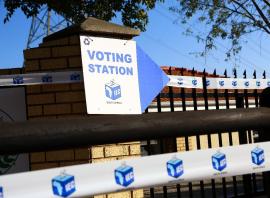
The Electoral Commission has urged South Africans to prepare for the upcoming local government elections by ensuring they are registered to vote where they ordinarily reside. At a media briefing on Tuesday, the Commission announced that a national voter registration weekend will take place on 20 and 21 June 2026, to maximise opportunities for citizens to register closer to where they live and to broaden electoral participation.
The Commission said it must be ready to administer elections whenever they are lawfully called. Once the voter registration process is completed, the election date is expected to be proclaimed by the Minister of Cooperative Governance and Traditional Affairs. Eligible voters will have until midnight on the day the election date is announced to register.
The proclamation will also trigger key processes, including the certification and publication of the voters’ roll, the inspection of the roll and lodging of objections, the adjudication of those objections and the submission of candidate nominations. The Commission emphasised that an early announcement of an election date is important to allow voters to decide where they will be on Voting Day, as this determines where they should register.
It noted that in Local Government Elections, voters must cast their ballot at the voting station where they are registered, as ward councillors represent communities in which voters ordinarily live. Preparations for the elections are already underway, including the ward delimitation process. In December 2025, the Municipal Demarcation Board finalised and handed over 4 305 wards to the Commission, representing 95% of all wards nationally.
Outstanding wards are in four municipalities in KwaZulu-Natal, namely eThekwini, Mkhambathini, Inkosi Langalibalele and Alfred Duma municipalities. According to the Board, court proceedings relating to the affected areas have concluded and the delimitation exercise has resumed. Ward adjustments have also led to the subdivision of 1 865 voting districts, representing about 8% of the total nationally. The provinces with the highest proportion of affected voting districts are KwaZulu-Natal and Gauteng, followed by Mpumalanga and North West.
These adjustments, combined with population movement, require the Commission to revise voting district boundaries and update the network of voting stations ahead of each election. The Commission reported steady growth in voter registrations through both digital and in-person platforms. Between November 2025 and March 2026, a total of 260 205 new voters registered, with 128 113 registrations captured through voter management devices and 132 092 through the online self-service portal.
The Commission attributed the increase to its nationwide online registration campaign conducted during February 2026. In preparation for voter registration activities, the Commission has begun recruiting registration staff based on approved criteria discussed with the National Political Liaison Committee. Candidates must be South African citizens and registered voters; must not have held political office or campaigned for a political party in the past five years and must not have been convicted of serious criminal offences.
Municipal Political Liaison Committees will review the lists of designated presiding and deputy presiding officers to ensure compliance with these criteria. The Commission is also conducting training programmes for electoral staff and journalists. A nationwide training initiative with the South African National Editors’ Forum aims to equip journalists with a better understanding of electoral laws and processes to promote accurate and ethical reporting during the election period.
Currently, there are 508 registered political parties in South Africa, including 20 that were registered between October 2025 and February 2026. Of these, 299 are registered nationally while 209 operate at provincial, district or metropolitan level. The Commission warned that the growth of artificial intelligence and digital platforms has contributed to the spread of misinformation, including fake voter registration websites designed to capture personal information.
Members of the public have been urged not to share their personal details on suspicious websites and to use only the official online voter registration portals. It also cautioned the public about a fraudulent recruitment notice circulating on social media, stressing that all legitimate vacancies are published only on the Commission’s official website and that no payment is required during its recruitment processes.