

Cairo: SiltaNews – News Desk
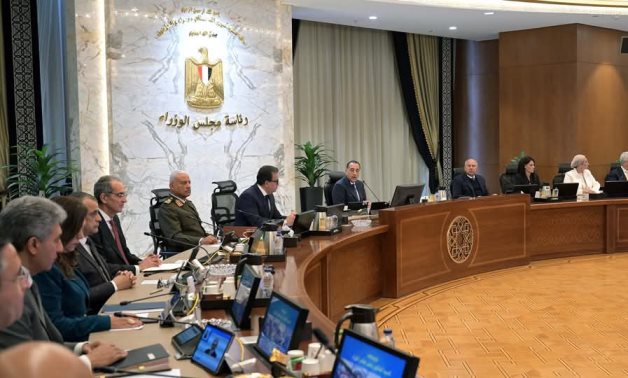
Prime Minister Mostafa Madbouly chaired a meeting of the ministerial economic group Monday to review priority economic files, led by scenarios for dealing with the repercussions of U.S.-Israeli operations against Iran and Tehran’s targeting of several Arab countries.
The meeting was attended by Deputy Prime Minister for Economic Affairs Hussein Issa, Central Bank Governor Hassan Abdalla, Finance Minister Ahmed Kouchouk, Supply Minister Sherif Farouk, Civil Aviation Minister Sameh El-Hefny, Petroleum Minister Karim Badawi, Investment Minister Mohamed Farid, Planning Minister Ahmed Rostom, Deputy Finance Minister Yasser Sobhi, and Deputy Foreign Minister Samar Al-Ahdal, along with other officials.
Madbouly emphasized the necessity of updating integrated scenarios prepared by various ministries to ensure full readiness based on the latest developments. He confirmed that a plan coordinated between the government and the Central Bank is in place to provide the foreign currency required to secure basic needs, including food commodities, petroleum products, and production supplies.
The Prime Minister noted that as the outcome of the war remains unpredictable, the government has researched various potential scenarios and established precautionary measures.
Cabinet Spokesperson Mohamed El-Homsany said the meeting highlighted that military operations against Iran have negatively impacted global markets and international economic activity. This has led to worldwide currency fluctuations due to international uncertainty, with Egypt affected due to its strategic importance in global trade and logistics.
The meeting also addressed the impact on fresh agricultural exports to Gulf, African, and Southeast Asian markets. Immediate coordination is underway between ministries to offer these products in the local market to protect exporters from losses.
Furthermore, officials discussed the status of Egyptian flights to Gulf countries, confirming ongoing coordination with civil aviation authorities in those nations. Regarding energy, El-Homsany confirmed that petroleum products are available in sufficient quantities for an extended period, supported by contracted shipments. The meeting reviewed the status of regasification vessels, confirming safe gas levels and efforts by the Petroleum Ministry to enhance strategic crude oil reserves in cooperation with international companies.
Finally, the group discussed preparations for the “post-IMF” economic development program and progress in the government IPO program. This includes preparing 20 companies for initial listing, procedures to transfer 40 companies to the Sovereign Fund of Egypt, and updates to the State Ownership Policy Document.